Property owners across East Texas often face thick vegetation, fast regrowth, and challenging soil conditions when preparing land for use. ABDT MGMT LLC works with landowners in Joaquin and the surrounding communities to help them understand how professional land clearing methods match local terrain and serve long-term goals.
Let’s review the most common clearing approaches that professionals use in East Texas and how each supports responsible planning, drainage, and future development.
Why East Texas Properties Require Specialized Land Clearing Approaches
East Texas landscapes differ from those in other regions because of dense pine and hardwood growth, aggressive brush species, and soils that shift quickly between wet and compacted conditions.
Successful clearing starts with understanding how vegetation, moisture, and access points interact. Local professionals assess tree density, root depth, and slope before recommending a plan.
Effective land clearing also depends on how the property will function after work ends. Hunting land, homesites, pastures, and access roads each require different results. Choosing the right approach improves efficiency and reduces unnecessary disturbance.
Matching methods to actual conditions protects soil stability and supports proper site preparation for your intended use.
How Mechanical Land Clearing Handles Heavy Vegetation and Roots
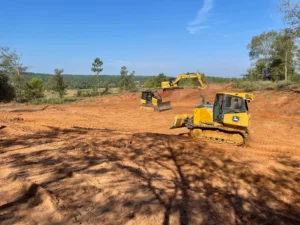
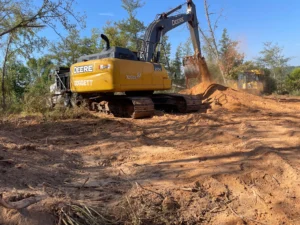
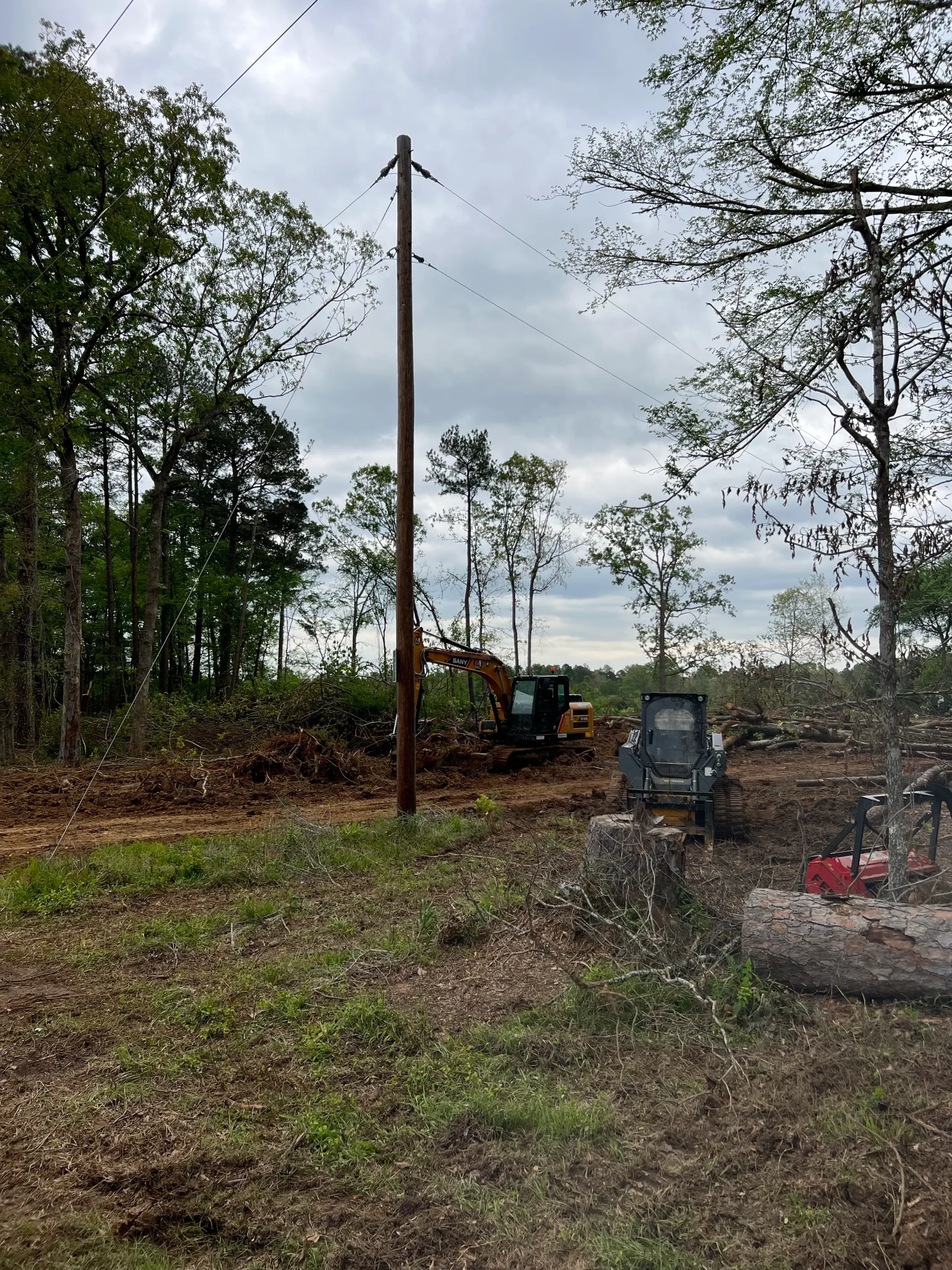
Mechanical land clearing forms the backbone of many East Texas projects. Heavy machines remove trees, brush, and root systems efficiently across large areas. Dozers equipped with root rakes push vegetation and loosen underground material. Operators pile debris for removal, processing, or disposal based on site conditions.
This method suits properties that require a clean slate for construction or agricultural conversion. Removing roots reduces future settling and supports grading accuracy. However, operators must manage soil disturbance carefully to prevent erosion during seasonal rain events.
Mechanical clearing often pairs with follow-up land grading to restore proper drainage and surface stability. When used correctly, this approach prepares land for foundations, driveways, and utility installation.
How Forestry Mulching Controls Brush Without Heavy Disturbance
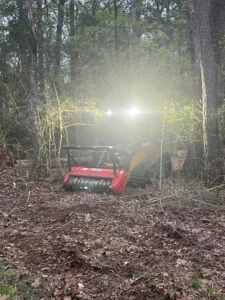
Forestry mulching offers a lower-impact land clearing alternative for managing overgrowth. Specialized machines grind vegetation into mulch directly on the soil surface. This approach works well for saplings, vines, and moderate tree growth common in the Pineywoods region.
Mulching leaves organic material in place, which helps reduce erosion and improve moisture retention. Landowners often choose this method when they want improved access without fully stripping the land. Mulching also limits debris hauling and eliminates smoke and safety concerns associated with burning.
Although roots remain underground, many owners accept controlled regrowth when long-term construction is not immediately underway. Mulching often works best for recreational land, trail systems, and wildlife habitat management.
Where Brush Removal and Tree Removal Fit Into Clearing Plans
Preparing land for development often involves completely clearing out vegetation.
How Selective Brush Removal Preserves Valuable Features
Targeted brush removal allows professionals to thin dense understory while preserving mature trees. Crews remove invasive species, tangled vines, and unwanted saplings without disturbing healthy canopy trees. This method improves visibility and accessibility while maintaining natural shade and aesthetics.
Selective clearing benefits properties near creeks, easements, or neighboring structures. Operators work carefully to avoid damaging retained vegetation. This approach suits landowners who value visual appeal alongside functional access.
When Tree Removal Becomes Necessary for Development
Some projects require complete tree removal to accommodate buildings, fencing, or roadways. Land clearing crews remove trees individually or in sections, depending on size and location. Root extraction prevents future movement that could affect structures.
Tree removal, when combined with grading and compaction, supports long-term stability. Professionals evaluate which trees to remove and which to preserve to balance safety, drainage, and cost efficiency.
How Controlled Burning Supports Debris Management in East Texas
Controlled burning serves as a debris management tool when regulations and weather allow. Crews burn cleared vegetation on site under controlled conditions to reduce hauling costs. Burning requires careful planning, firebreak installation, and strict compliance with local restrictions.
Burning reduces the volume of material on the ground and prepares the land for additional work. However, burn bans and smoke sensitivity limit property owners in many conditions. Landowners must carefully verify weather and compliance before planning a burn of any size.
How Land Grading Completes the Clearing Process
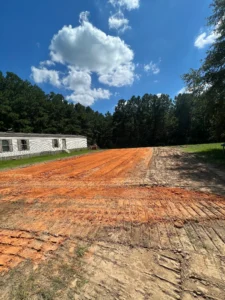
After vegetation removal, land grading shapes the ground for drainage and usability. Grading creates stable building pads, smooth access routes, and proper runoff control. Operators consider rainfall patterns common to East Texas when shaping surfaces.
Poor grading leads to standing water, erosion, and unstable driveways. Professional grading takes soil composition and future loads into consideration. This step often completes the transition from raw land to functional property ready for further use or development.
Contact ABDT MGMT LLC To Discuss Expert Land Clearing in East Texas
When you need guidance on land clearing, site preparation, or land grading in Joaquin or around our part of East Texas, ABDT MGMT LLC provides experienced support.
Call (936) 246-2946 or contact us online to get a quote for responsible clearing solutions tailored to your situation.